
EN
Off-Grid Modular Buildings: A New Development Model for Eco-Tourism
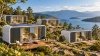
Some of the most attractive destinations for eco-tourism are also the hardest to develop. Mountain areas, forests, islands and remote rural locations can offer the natural experience visitors want, but extending conventional power and construction infrastructure to these sites can be expensive and slow.
This is becoming more relevant as two trends develop at the same time. UN Tourism's Best Tourism Villages initiative now connects 319 rural destinations across 65 countries, with infrastructure, connectivity, economic sustainability and environmental sustainability among its evaluation areas.
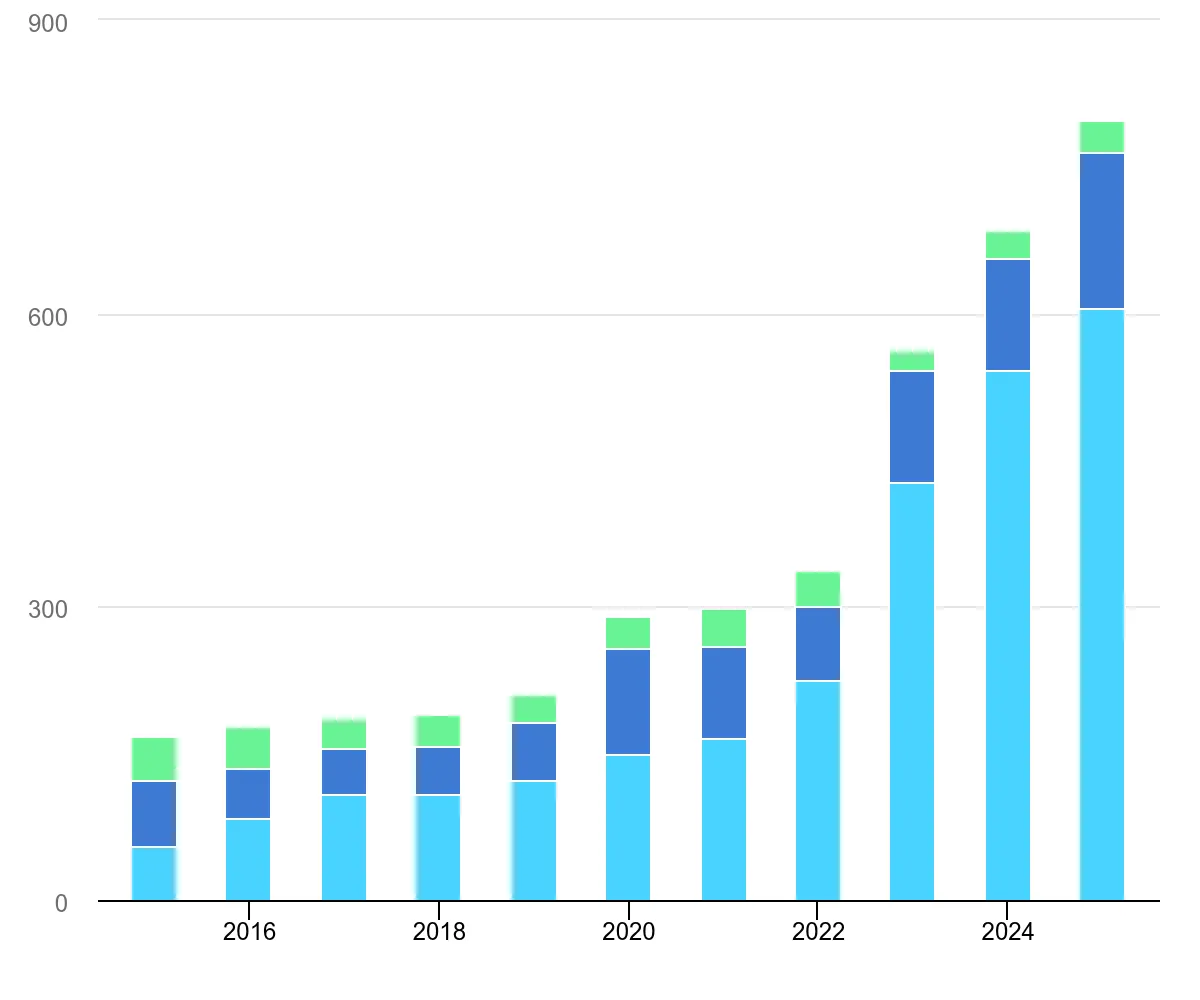
At the same time, distributed energy is becoming more practical. The IEA reports that global solar PV additions exceeded 600 GW in 2025, while 108 GW of new battery storage was deployed. Its 2025–2030 outlook also estimates that distributed solar applications, including off-grid projects, could account for 42% of global PV expansion.
For modular building suppliers, these developments point to an opportunity worth watching: remote accommodation may increasingly be developed as a deployable building-and-energy system rather than as a conventional resort waiting for full infrastructure. This creates a potential market for modular buildings for eco-tourism, particularly where developers need to bring accommodation to remote destinations without first building an entire conventional infrastructure network.
Why Remote Tourism Is Creating Demand for Smaller Modular Developments
The biggest obstacle to a remote tourism development is not necessarily the building itself. It is the infrastructure surrounding it.
A conventional resort may require power connections, roads, water systems and extensive site construction before accommodation can operate. For a small destination, that creates a difficult investment equation: the developer may have to commit heavily before knowing whether the location can generate enough demand.
This is where off-grid modular buildings become interesting.
A small number of factory-built accommodation units can potentially be transported to a remote site, installed with less site-based construction and supported by a decentralized energy system. The objective is not to eliminate infrastructure, but to reduce how much permanent infrastructure has to be established before the first guests arrive.
That creates a different development model:Start with a viable number of accommodation units, operate the destination, validate demand, then expand.
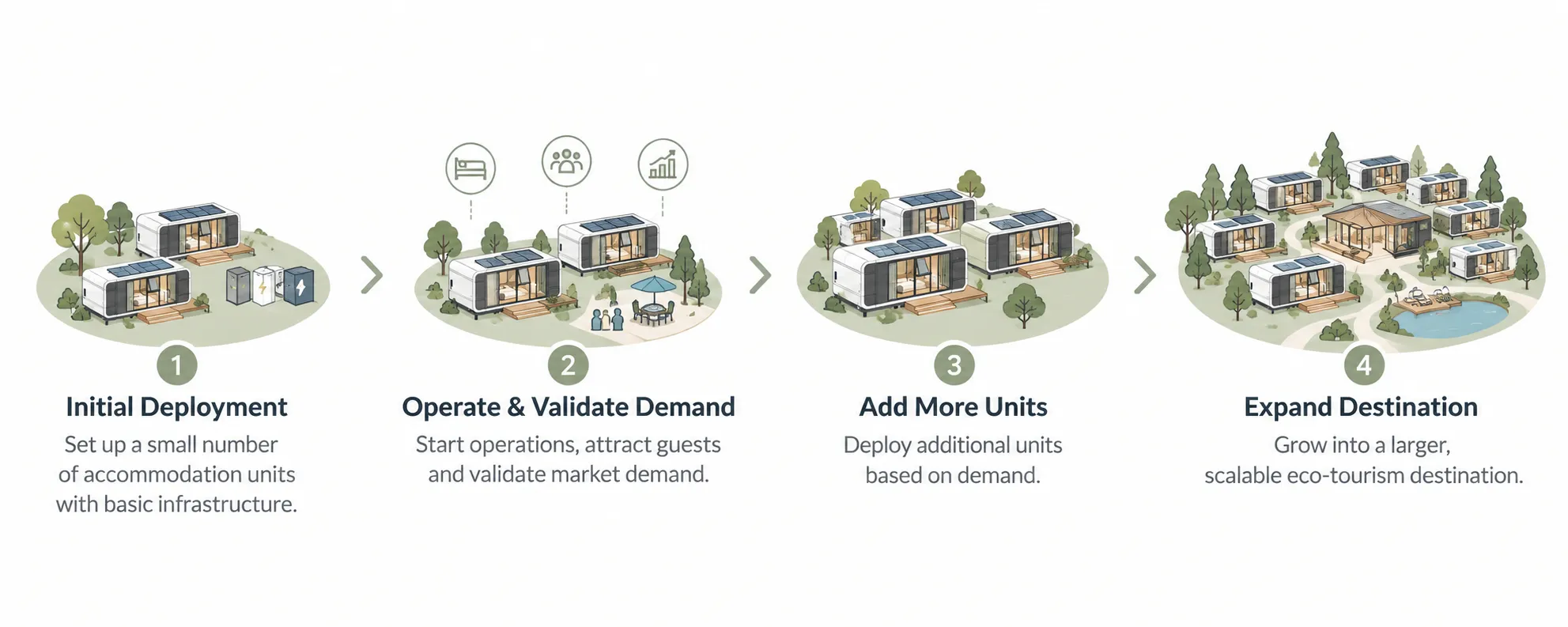
For eco-tourism developers, that may be more commercially meaningful than simply reducing construction time. Instead of committing to a large resort from the beginning, modular accommodation creates the possibility of developing a smaller site first and expanding when demand becomes clearer.
The Building and Energy System Need to Be Designed Together
Calling a building “off-grid” does not make it an off-grid solution.
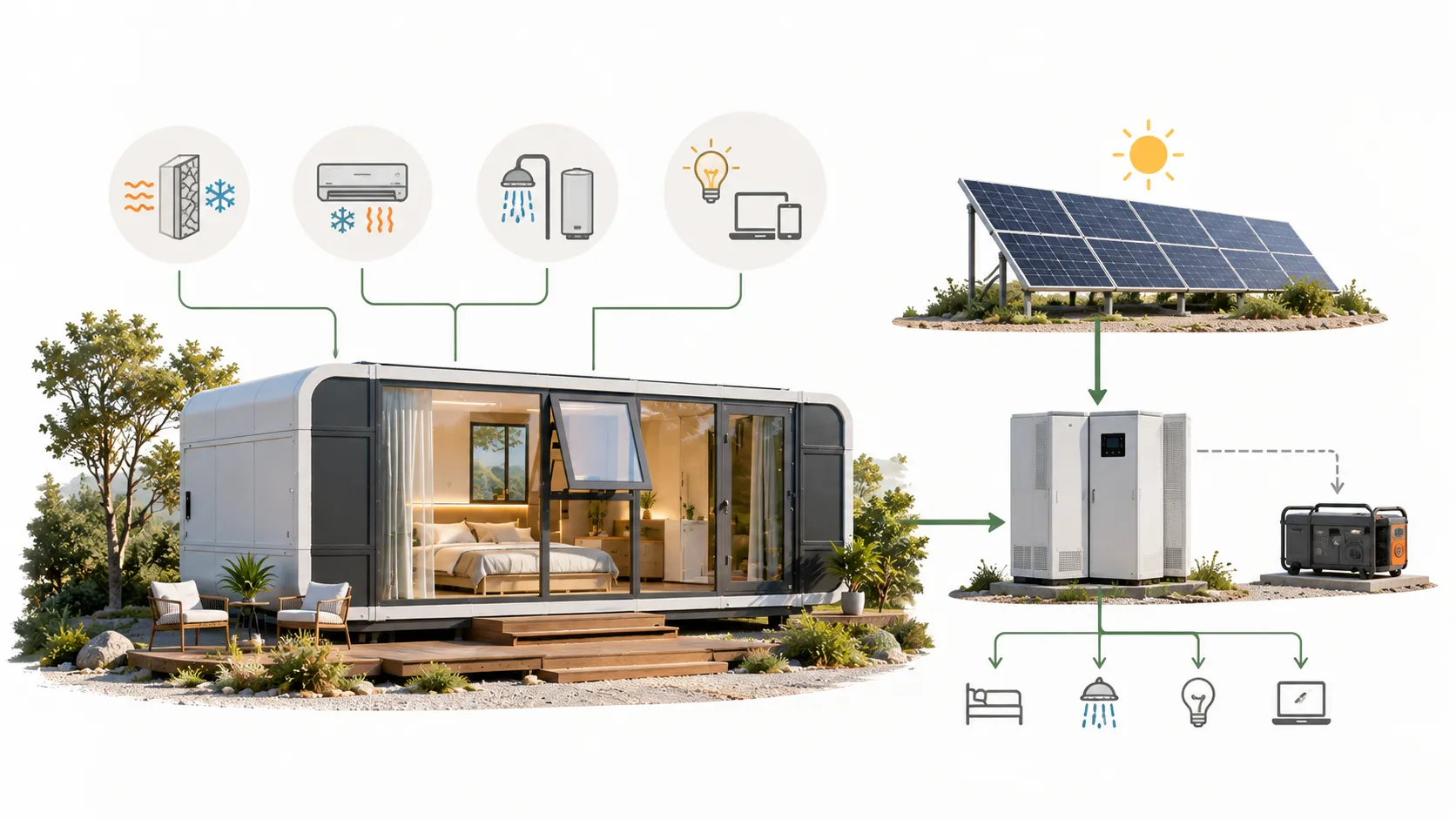
The accommodation's insulation, glazing, HVAC, hot-water system and electrical load determine how much energy the site actually needs. Solar capacity, battery storage and backup power then have to be designed around that operating profile.
This is why the next generation of off-grid modular cabins should be considered as part of an energy system from the beginning, rather than as conventional cabins with solar panels added afterward.
The opportunity is particularly relevant to accommodation made up of repeatable individual units. A developer may be able to add several cabins without rebuilding the entire accommodation infrastructure each time.
The building therefore needs to be designed around three practical questions:
Can it be transported efficiently?Can it operate within a manageable energy load?Can another unit be added later without redesigning the entire site?
That is a more useful starting point than asking which modular house has the lowest purchase price. For off-grid glamping accommodation, the building, energy demand and deployment method increasingly need to be considered as one project rather than as separate purchases.
Choosing Modular Accommodation for Different Eco-Tourism Models
Not every eco-tourism accommodation project needs the same type of modular building.
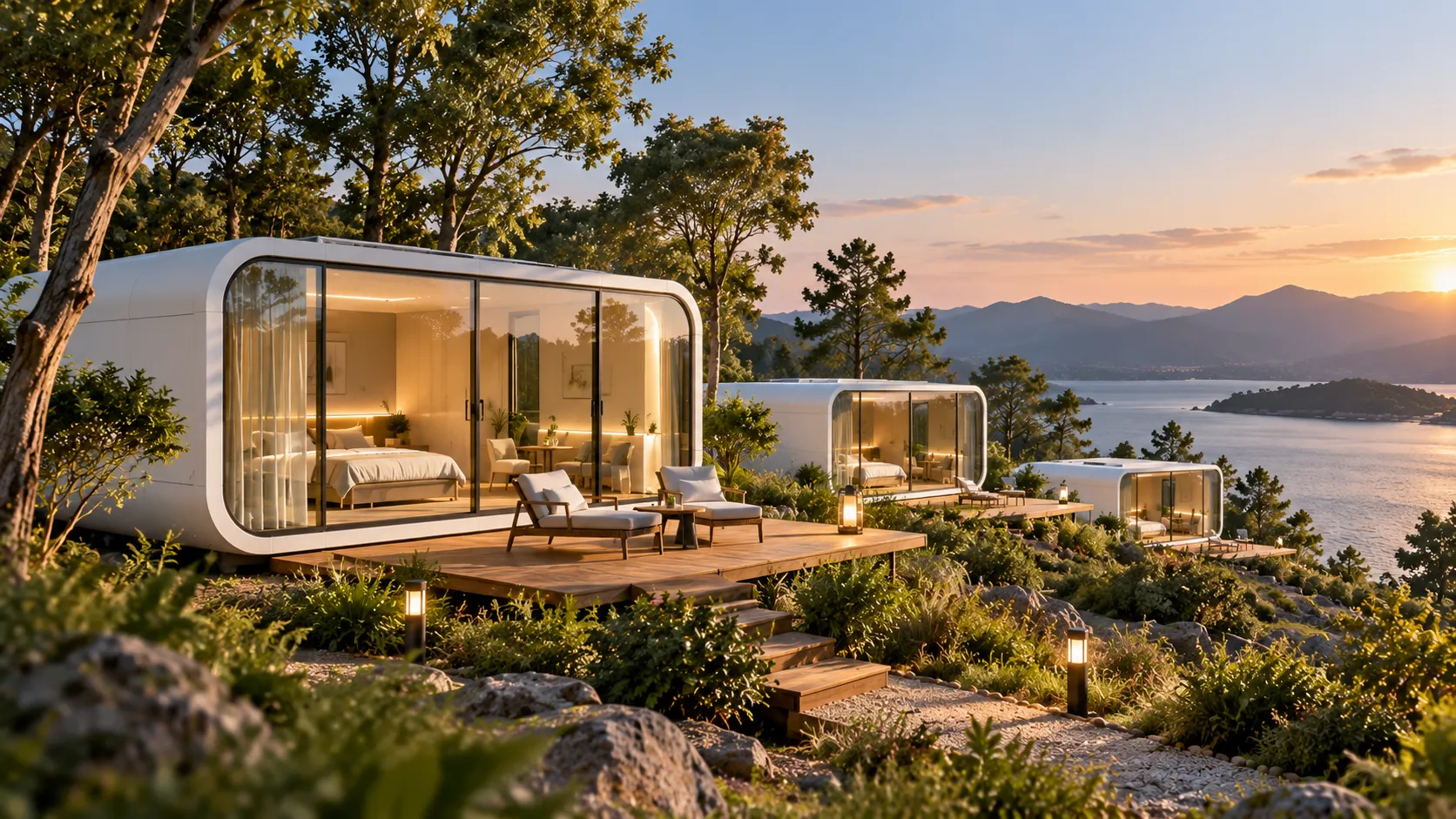
A destination selling private landscape experiences may benefit from distinctive accommodation where the building itself contributes to the guest experience. Products such as an Apple Pod or Space-style modular cabin can fit this model because the individual unit can function as both accommodation and part of the destination's visual identity.
For example, a 5800mm Apple-style modular cabin can be evaluated for independent glamping accommodation, while a Space Capsule modular cabin offers another approach to individual guest accommodation.
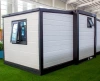
A different project may place greater emphasis on transportation and deployment. Where access roads, lifting conditions or shipping dimensions create constraints, a folding container house may be worth considering because the transportation form can be part of the building strategy.
The point is not that one product is universally better. The product should follow the site's business model, access conditions and expected operating pattern. A scenic glamping destination, a remote worker camp and a larger nature resort may all require modular construction, but their accommodation strategy does not need to be the same.
Why Phased Development Could Be the Strongest Opportunity
From a supplier's perspective, the most interesting part of this trend is not necessarily the idea of a completely self-sufficient resort.
It is the possibility of small, repeatable and expandable modular accommodation.
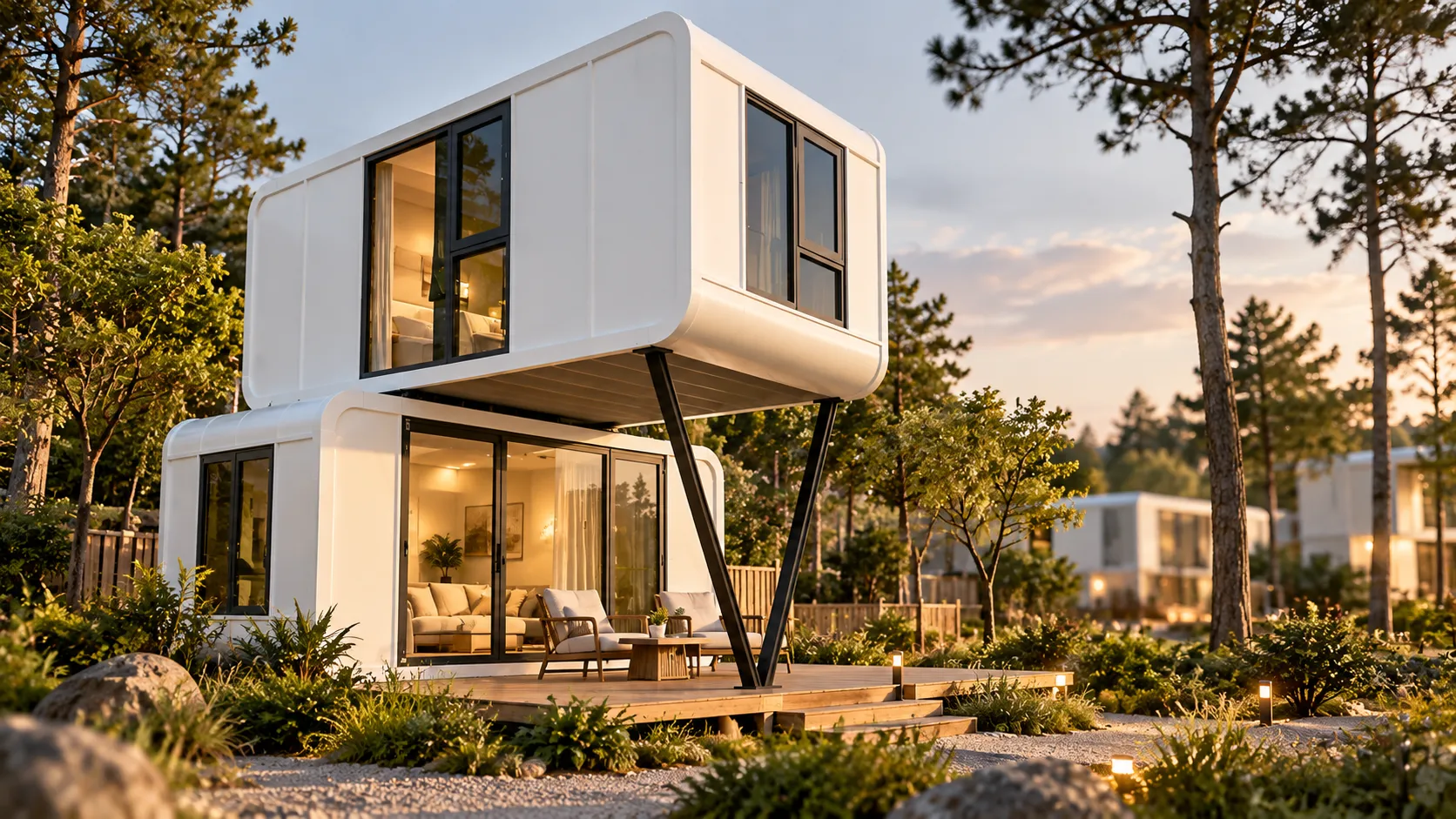
Imagine a remote destination with strong landscape appeal but limited grid access. Instead of constructing a large resort immediately, the developer could establish a smaller group of accommodation units, energy equipment and essential site infrastructure first. If occupancy and revenue justify expansion, additional units can follow the same basic design.
This changes the investment logic.
The question becomes less:“How much does one building cost?”
and more:“How much infrastructure do we need before this destination can start operating, and how easily can the system scale afterward?”
That distinction could make off-grid glamping accommodation particularly relevant to emerging glamping destinations, rural tourism projects and remote nature-based accommodation. A developer does not necessarily need to build the final destination in one phase; a repeatable modular unit can become part of a staged remote tourism development model.
When Off-Grid Modular Accommodation Makes Commercial Sense
The model is strongest when several conditions exist together: the site is remote, accommodation can be standardized, transportation is manageable, grid connection is difficult or costly, and the developer expects demand to grow in stages.
It is less compelling when every building requires a completely different design, the site cannot accommodate lifting and installation equipment, or local regulations make the chosen modular system difficult to approve.
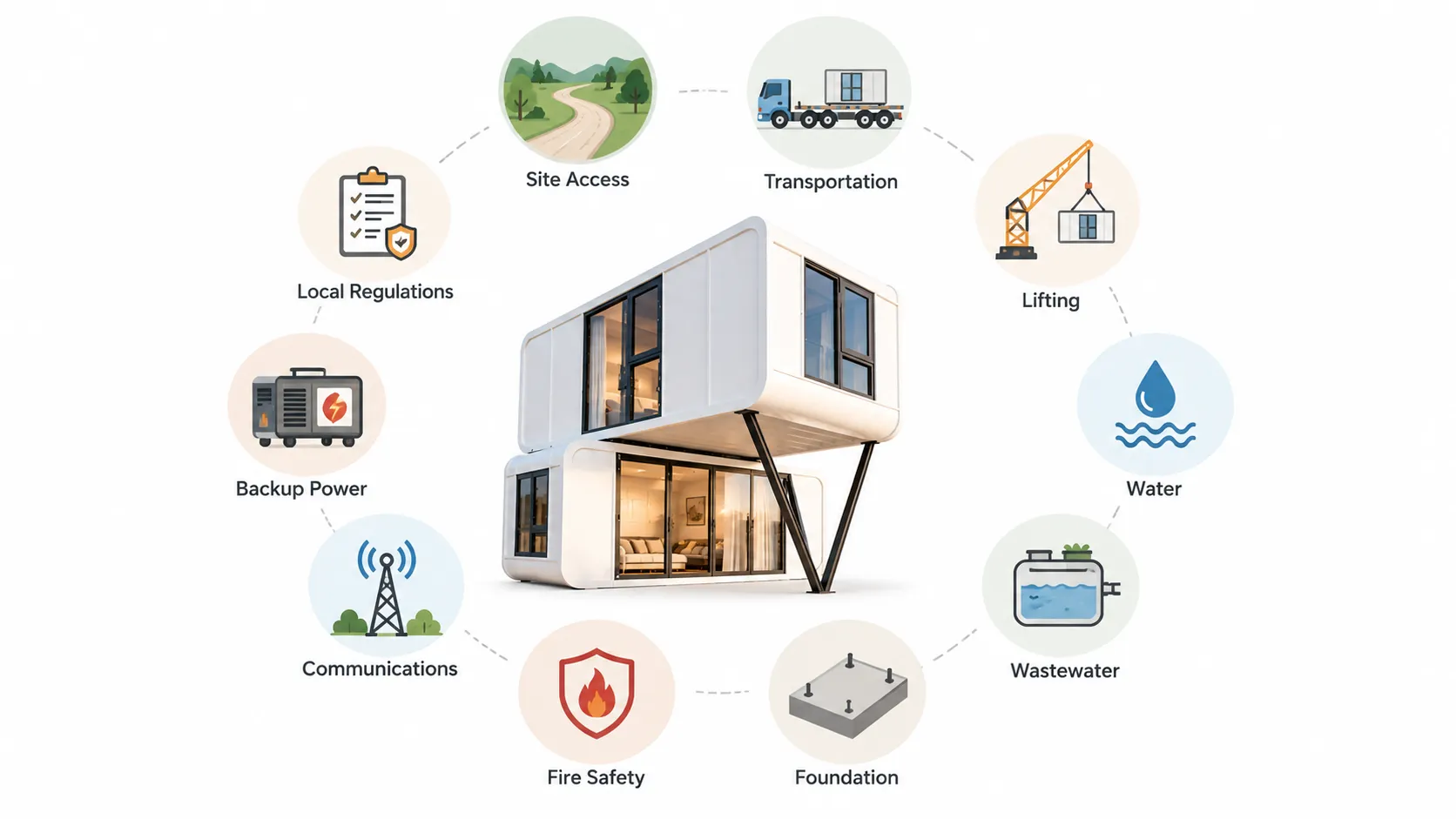
Off-grid also does not mean infrastructure-free. Water, wastewater, foundations, fire safety, communications, backup power and local building requirements still need to be engineered.
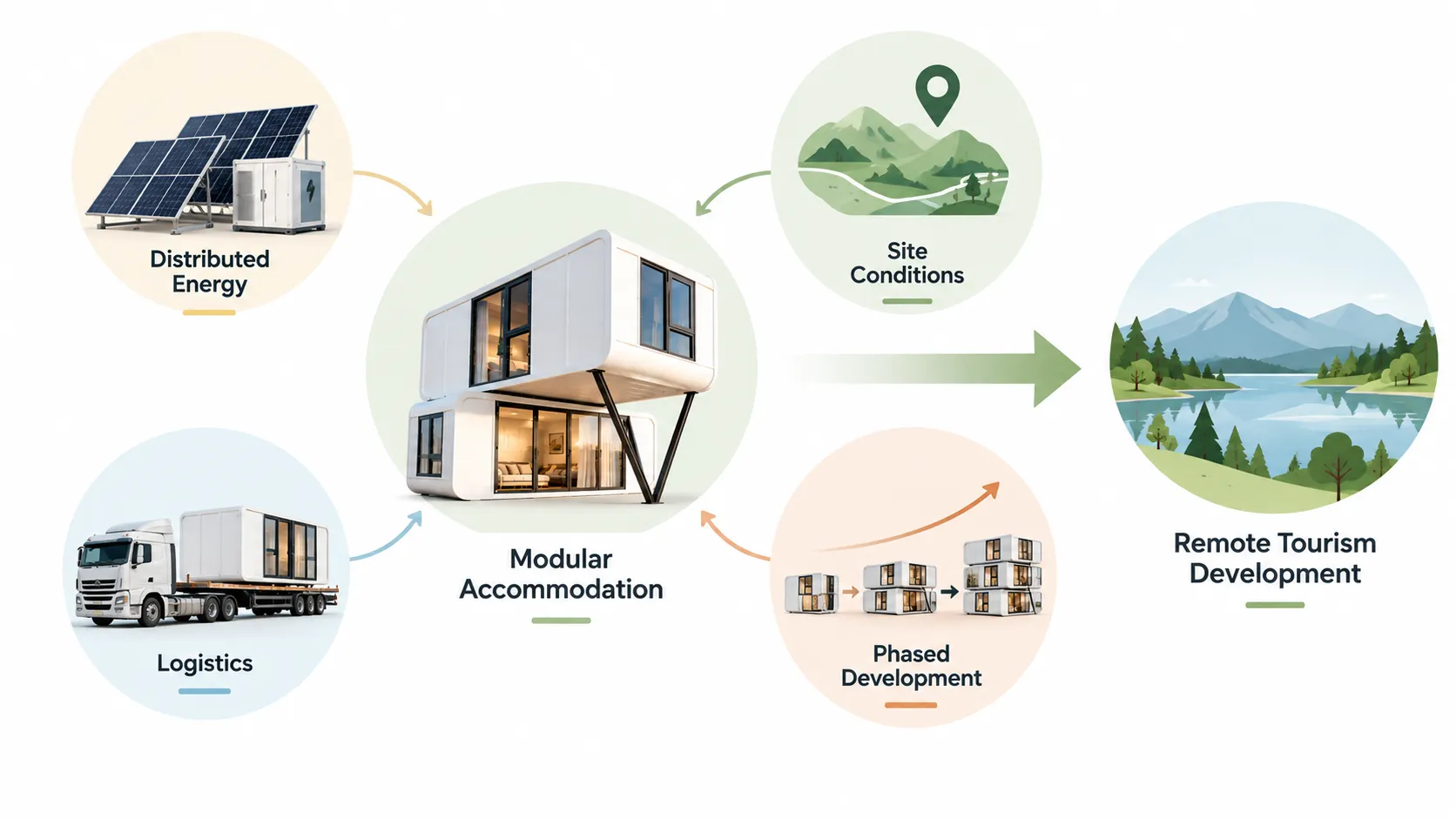
That is why the future opportunity is not simply “solar cabins.”
It is the integration of:
Modular Accommodation + Distributed Energy + Logistics + Phased Development
For eco-tourism developers, this could open a practical way to bring accommodation to places where conventional infrastructure would otherwise make development difficult.
For modular building suppliers, the opportunity is moving beyond manufacturing a building. The more valuable question is how to make that building transportable, deployable, energy-conscious and repeatable under real site conditions.
That is where modular buildings for eco-tourism may become a meaningful part of the next generation of remote tourism development.
The next step for an eco-tourism project is not necessarily choosing a house from a catalog. It is determining which modular accommodation format fits the site's access, energy requirements, guest experience and planned development scale. If you are evaluating a remote glamping or nature-tourism project, Contact Us to discuss your site conditions and accommodation plan, and our team can help compare suitable modular models and customization options for the project.
Related News

.webp?x-oss-process=image/resize,w_100/quality,q_100)
Contact US
Product Information
Quantity
Unit
Piece
Support order samples, customization, wholesale direct, and complete payment. If the product you look for does not have corresponding customized content, pls fill out the form below to contact us, and we will reply ASAP.